
The Nature of the Mind

Another of my Raja Course Essays. I am working on them slowly, and have a couple more to publish here. Once these are done, I am planning to take a back-step, because at the moment, it’s not high enough on my priority list, and I want to give this course my full attention. I wrote this one in October 2018: 

The Nature of the Mind: 

The nature of the Seer (our true selves) is impacted heavily by the mind. The mind, to use an analogy is like a lake; when the lake is still and clear, there is peace in our thoughts. We are able to look into the lake and see ourselves clearly; a true reflection. However, when the lake is murky, or there are ripples in the water – our busy thought forms – the reflection is distorted. We are unable to see ourselves in our true form, because, as Swami Satchidanda said, the mind is coloured. The goal of yoga is to restrain the mind, to free us from the bondage created by these thought forms; known as vrittis so that we can cultivate peace and harmony in our lives.

In the practice of yoga, through meditation, we observe our minds without judgement. In time, with regular practice and dedication to ourselves, we see that our minds are less busy, and that our thoughts are useful. In more time, we are told by experienced practitioners and the great gurus and spiritual leaders, that we can turn off our thoughts, and experience total stillness; a perfect reflection in the lake of our minds. This is what the Sutra’s tell us, once we have managed yogas chittas vrittis nirodhah, we can abide in our own true nature (Sutra 1:3 – tada drastuh svarupe vasthanam).

Patanjali tells us that the vrittis are the key. These 5 mental modifications that can either be painful (selfish) or painless (selfless).

  1. Right Knowledge: we can choose to be indifferent, or we can choose to learn about our high self, to do good, and to be good.
  2. Misconception: when we do not understand the full story yet make judgement/observations based on only what we know – e.g. the coiled rope being mistaken for the snake. As we modify our minds through yoga, we are able to understand that there is knowledge missing, so we seek it.
  3. Verbal delusion: when words are used to convey images that are not true to reality. If we are able to modify our minds, we can sense verbal delusion from others and use our discriminative discernment to maintain our truth. Additionally, we would not use verbal delusion with others.
  4. Sleep: our minds are not blank in sleep, and through meditation, we can modify this vritti to influence our minds even as we dream.
  5. Memory: our minds attach emotions to memory and often this leads to feelings of regret or sorrow if the memory is associated with a bad experience. Through yoga, we can modify our thought patterns and let go of this attachment to the emotion and accept that we cannot change what has already occurred.

Authors Epiphany:

In relation to the last vritti, there is a quote that comes to mind:

The past does not exist, but you are dealing with the non-existent, going about as if it is a reality. That is the whole illusion. Mind is the basis of this.[i]

The past only exists in our heads, because when we write it or verbalise is, the full experience is lost. Words are able to convey experiences only as far as the person listening or reading can associate a personal experience to. This is the beauty of the mind. The mind allows us to understand pain, because we have felt it, so we can empathise; but our empathy doesn’t mean we are having the same experience, only that our minds have allowed us to understand something similar.

Through meditation, we can free ourselves from the thoughts that ‘weigh us down’, and by doing so, we are able to increase the compassion, love and joy we feel. A clear lake (mind) is the goal of yoga, as set out by Patanjali; it allows us peace and harmony. However, the muddy waters are part of our human experience, and the are what allow us to have an enriched life. The goal for me isn’t a perfectly clear lake all the time; in total honestly, I don’t think that it’s possible. My goal is a clear lake during quiet pockets of the day, but to fill the rest of the day with love, joy, pleasure, laughter; all the things that make life beautiful. Our minds are an incredibly interesting and beautiful and, in some ways, scary place, but that is part of our human experience.

Raising my son, I can see how his mind is shaped by different experiences. I want to make them good, I want to increase his enjoyment and enthusiasm. And, I want him to experience pain. I want him to grow knowing in his mind that pain and pleasure are both fleeting. There must be balance. Sthira and Suka.

As Chögyal Namkhai Norbu said, “Beyond the mind, beyond our thoughts, there is something we call the ‘nature of the mind’, the mind’s true condition, which is beyond all limits. If it is beyond the mind, though, how can we approach an understanding of it?”

I think the nature of the mind is to strive for quiet, for steadiness and for peace; but until the mind has had the opposite, we do not appreciate the silence.

Sources: 

[i][i] https://isha.sadhguru.org/yoga/yoga_articles_mind_stress/yoga-and-the-mind/

Abhyasa vairagyabhyam tannirodhah – Sutra 1:12

As part of my Raj Yoga TT, I am writing essays to expand my knowledge of yogic philosophies. This is the 2nd essay that I wrote. I have a few more and am currently working on essay 5. I want to have them on my blog to allow ease of access, and to help anyone who comes across it.

Happy reading,

Xoxo

R

Sutra 1:12

Abhyasa vairagyabhyam tannirodhah

These mental modifications are restrained by practice and non-attachment.

Figure 1

scalesabhyasa

Sutra 1:13 – Of these two, effort towards steadiness of mind is practice.
Sutra 1:14 – Practice becomes firmly grounded when well attended to for a long time, without a break and in all earnestness.
Sutra 1:15 – The consciousness of self-mastery in one who is free from craving for objects seen or heard about is non-attachment
Sutra 1:16 – When there is non-thirst for even the gunas (constituents of Nature) due to realisation of the Purusha (true Self), that is supreme non-attachment.

Introduction:
In Sutra 1:12, Sri Patanjali instructs his readers to work on their minds and thought patterns through practice and non-attachment. Sutras 13, 14, 15 and 16 expand on this one instruction, providing more detail and allowing a better understanding of what Patanjali means by Abhyasa and Vairagya. Both concepts (practice and non-attachment) are inextricably linked, allowing the yogi to restrain their minds when a balance between the two is found (Swami Prabhavananda & Isherwood, 1981, p. 28; Satchidananda, 1990, p.18-19). A cornerstone of yogic practice, Sutra 1:12 provides a window for yoga to come “off the mat” and into daily life. This essay will examine the concepts of practice and non-attachment, focusing first on Sutra 1:12 before turning attention to analysis Bahasa and then Vairagya. Finally, the essay will conclude with a personal interpretation of these sutras, to demonstrate an understanding that goes beyond mere research and explanatory words.

Sutra 1:12
According to Rizopoulos (2017), both practice and non-attachment can serve as a roadmap to aid navigation through life. In her explanation, she says that the basis of Sutra 1:12 is that the efforts made in practice should be determined, but that in equal measure, the outcome of those efforts should not be of concern, i.e. we should not be attached to them. If this is achieved, the mental medications that exist in our minds (vrittis) will lessen. Gannon (2011) expands on this, asserting that through abhyasa and vairagya we can identify with our inner self, essentially echoing Sutra 1:16. The suggestions given to perfect the efforts made are similar to those explained by Swami Satchidananda in his commentary of Sutras 1:13-16 (1990, pp.18-30). Swami Satchidananda makes these sutras accessible, referring to temples and churches as social centre’s and demystifying the idea that through renouncing worldly goods, there is no enjoyment in life. The explanations given do not give false hope that mastery over the mind through abhyasa and vairagya is easy, but rather, provide suggestions for the reader to apply them in their own way.

Abhyasa:
Practice, Sri Patanjali says must continue “for a long time, without a break and in all earnestness” (Swami Satchidananda, 1990, p.20). The abstract nature of Sutra 1:14 allows the student to interpret and apply it in their own way. The long time necessary may feel daunting at first, but if determined, a habit can be created, which for a keen student may lead to a lifetime commitment to their practice. This practice can be a daily meditation but is not limited to it; many yogis commit to a vegetarian diet, or fasting, others to Karma or Bhakti yoga. The commitment of time demonstrates the earnestness of the student, as illustrated by Swami Satchidananda’s commentary about the amount of births one must go through before reaching heaven (1990, p.21).
There is no shortage of ways to begin establishing a committed practice, and often starting with one leads to the accumulation of more over years. Bryant (2013) suggests that cultivating a Hatha Yoga practice is pathway to train the mind towards abhyasa, because the disciple of rolling out a yoga mat and moving the body is created. Hatha yoga, especially within the Western world is often the gateway for people into the more spiritual side of yoga, alongside the science of the mind.

Vairagya:
Non-attachment from sensory objects is referred to by Sri Patanjali as “self-mastery” (Swami Satchidananda, 1990, p.23). In his commentary, Swami Satchidananda warns that non-attachment is not the same as indifference, but rather it is the ability to let go of the mind’s desires. This ‘letting go’ takes a lot of work, hence its relationship abhyasa. Gannon (2011) explains that vairagya is “facing something – even positive – and not identifying with it,” because while the mind may relate to something and allow it to be defining, the inner, true Self, is not defined by sensory experiences. However, beautifully worded by Malossi (2013), part of the human condition is to cling onto what we like and shun what we don’t like. Ironically this is what leads to most of human suffering as well; the inability to ‘let go’ of our clinging and aversion often leads to mental battles that if unresolved, lead to physical tension. Swami and Isherwood emphasise also that the practice of non-attachment should not be seen as a “kind of sel-torture” but rather the key to freedom.

My Understanding:
Sutra’s 1:12-16 provide us with the necessary tools to work on our minds and move towards a state of peace in our true Self. However, finding the balance between dedication to practice and working on lessening attachment is particularly difficult. Personally, I am goal driven, so I will put the effort in and practice wholeheartedly for what I want to achieve, but I am determined to see the result gained and am attached to it. This determination has stood me in good stead for example, in completing my degree, but has also let me down when results for specific assignments felt unjust and made me upset. The idea of sitting with pain, or joy or any emotion that exists, understanding that emotion and then letting it pass is a beautiful one on paper, but one I have found increasingly challenging. I am better at recognising negative emotions, and often I attempt to let go of resentment or ill-feeling, but it is a practice that seems forgotten in the ‘good times’. In my meditation practice, I often pull my mind back from making ‘To Do’ lists or mulling over events that have occurred. When I started, I couldn’t sit for more than 1 minute in quietness, now, provided my son allows me the time, I can sit for 5-8 minutes, though my thoughts do run away at times. To aid myself, I focus on an image of the Om, or use mantra.
I understand these 5 Sutras to mean that as a student, I should hold myself steady in my convictions and be determined in what I aim to accomplish, while also understanding that the results of my work are not mine to hold and lock away, but rather that they exist independently from me. These Sutras tell me that the journey towards the goal, of graduating, of more sleep, of a detailed plan, or anything else, is much more important that my arrival at that place. For this, the story of Narada telling the yogi he had as many births as the leaves on a tree before he met the lord, comes to mind, because it encompasses everything I am striving for: patience, acceptance and joy.

References:

Yogas Chitta Vritti Nirodhah

Hello lovely reader,

I am currently taking a Raja Yoga Teacher Training (in slow motion because of my travelling tendencies), and wanted to share my essays as I write them. Yoga has helped me in almost every aspect of my life so far, and so I want to share these teachings and make them accessible to others.  My beautiful teacher Nalanie is working with me one-to-one, to help me become the best teacher I can be. 

With much love xxx 

R

Introduction:
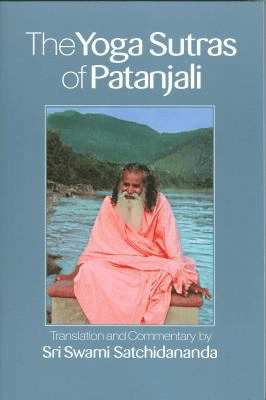
Yogas Chitta Vritti Nirodhah is, as Swami Satchidanda says, the Sutra that encompasses all others, and for a keen student, it is enough; all the following ones are expansions and explanations of this one Sutra. For the purpose of this essay, two interpretations of the Sutra will be considered, followed by a personal analysis of the Sutra (this analysis will contain first person narrative). Before exploring this however, it is important to note that a Sutra is a “thread” of wisdom, passed down by Sri Patanjali to his students through oral teachings. The intention of the Sutra’s, as understood by the author, are to guide yoga practitioners by providing a reference for them to return to, similar to the 10 commandments of the Holy Bible. All the Sutras are shorthand notes, often meaning that they form no complete sentences. In this instance, the literal meanings of the words are Yogas (yoga) Chitta (Conciousness/of the mind-stuff) Vritti (Modifications) Nirodhah (Restraint); made into a tangible phrase, it is translated into “the restraint of the modifications of the mind-stuff is yoga” (Satchindanda, 1990, p.3).

Definition A:
According to an article in the renowned magazine, Yoga Journal (2007), an understanding of the consciousness referred to by Patanjali in this Sutra allows an easier path to navigate through life. The Chitta is filled with content from everyday life, through the senses, content enters the mind, and it is like a constant turning wheel. These thoughts, opinions, memories and feelings are easily identified with, as they relate to the physical realm of being experienced in this life. However, the Chitta has two elements to it, the content it is filled with is merely a filter, the second element is the Seer (Drashtri) which is the lens for the Chitta. Without the lens, the filter would be useless. In the same way, without the Drashtri, the content experienced by the Chitta would not be of any value, because the content would not be seen.

Definition B:
Joshua Michaell, a Psychotherapist with a yoga-based counselling practice asserts that his initial understanding of Sutra 1:2 was similar to many others, the idea that yoga is about stopping the mind. However, Michaell discusses that in reality, Sanskrit does not allow just 1 translation, but rather is open to multiple interpretations, allowing Patanjali’s sutras to also have a multitude of explanations. This is the beauty of Patanjali’s work. Michaell discusses the etymology of the Sutra, an incredibly interesting speciality, eventually proposing his own translation, that “yoga is the process of selectively eliminating habituated thoughts, patterns, identifications (occurring), within the field of all that can be perceived.” He further suggests that having this more relaxed definition allows a practitioner to be more compassionate with themselves within their person practice.

My Analysis and Conclusion:

The first definition discussed provided an interesting insight to the idea that our chitta is composed of two elements inextricably linked. I particularly like the stance that the sutras provide us a way to navigate life, but the second definition for me provides a much greater take on this. The Sutra’s as threads can be woven to fit each of us in our journey, and every time we return to them, I think we can find them different, sometimes we learn more, and sometimes our understandings change; the possibility of multiple interpretations of yogas chitta vritti nirodhaha, along with all the other sutras, then becomes more inviting, especially I think for a beginner. Personally, I like the definition given in Swami Satchidanda’s translation, however, I can resonate with Michaells translation too, as a stepping stone.

I think as a definition of yoga, Sutra 1:2 allows anyone to access it. For me, it is about taking moments of pause to restrain my mind from acting like a whirlpool caught up with trivialities of daily life. Personally, practicing this restraint of mind means to cease gossip or avoid it through changing the subject, to send blessing and light to those who I like but more to those I dislike or feel upset by and also to hold back a short temper and repeat ‘Om Shanti’ either inwardly or out loud; admittedly this last one is a practice I am working on but find the most challenging. These are small practices, but they are my way of modifying my mind now, and I understand this Sutra to instruct. I think that it asks us to work daily on our minds, to restrain them and to love them, in whatever way is possible.

Sources: