Day 11 – Sunshine, smiles and some midnight musings.

Ahhh what a difference comes with the weather. I know I rambled about this already, but it was just so reinforced today with my dad here for a visit. The kids played outside while I got some house bits sorted, including more of our decor put away ready for moving, and then we head to town for ice creams and a park play.

These are the kinds of things I used to do all the time, and I think in part over the winter, I’d lost sight of how much impact the weather has on me.

It’s not that I don’t enjoy winter, because I do… but my kids struggle to get out the house; and so I find being stuck indoors very hard. I shared how much easier it all feels with my partner and he said “darling you aren’t meant to live life indoors” … he’s right. Generally but also because for my and my mental health, getting out is essential!

This past winter P brought up some of his birth imprints; including feeling rushed and pushed out before he’s ready. It came up in our getting out the house  which would take up to 3 hours on some days. I didn’t have the language for it all at the time, but now I see this need for absolute control as a way to regain some of what was lost in his birth.

When I first heard about them, I knew, birth imprints made sense to me… albeit a little ‘out there‘ in terms of understanding them. Working through this one with P – whcih outside of some play has involved ONLY working on my own nervous system, I feel so strongly about the way they can impact us.

Diving deeper and learning more has been super interesting and I am right in the middle of some books now, fascinated.

The changing weather helps us, because as it gets brighter and warmer, he’s more willing to come out. When we had a garden that was enclosed, he would spend hours climbing and being out… so I’m looking forward to this again. My intention is to build a space for them to really be able to spin and jump and play in the ways that they need for their bodies. His body NEEDs to move, and there’s nothing wrong with that… it helps his brain. Through the winter  he slowed down a lot, got into more lego and sat for ages, focused and content. Now, he’s jumping and climbing everything… I’m grateful to go along with as much as I can.

Seeing them play and find creatures has been epic. P spend a long time telling my dad all about different pokemon evolutions while he ran around or enacted different scenes. My dad, focused on looking for caterpillars, listened and repeated back all the right things to validate to P that what he was infodumping was important. Its got me thinking about finding a pokemon magazine or similar, to see if it’ll encourage some reading. So far, he adores looking through our pokemon encyclopedia and he is memorising the evolutions from there.

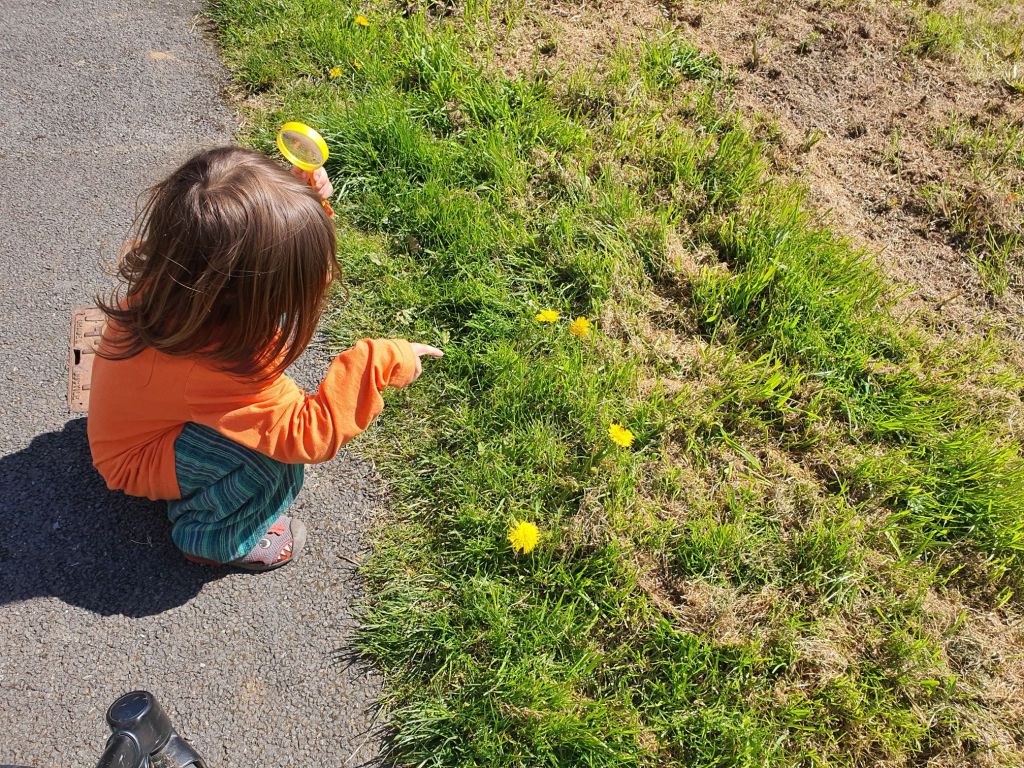
K, obsessed with bugs at the moment, pottered after my dad with a magnifying glass, thrilled to be out for so many hours with someone finding him all the things to look at and hold.
I haven’t dived into much of his birth recently, though I’m drawing on aspects of all of theirs as I plan for our next.

A was at preschool so in between house jobs, I’ve started making my birth plans … though I advise for a plan A, B, C and D, I’m starting with our actual plan, and then, our emergency one. Over the next week, I’ll be creating more in depth scenario based bits… and packing a bag I don’t intend to use. 

I have been very chilled so far, and as we get closer I feel really trusting that this birth will bring what it needs to. I have had lots of quiet and I’m grateful for it… but that’s for another share. Probably not tomorrow’s. 

For tonight,  I’ll leave it,

With love, Rohana x

Self study, dopamine and why I’m not worrying that my kid can’t read yet.

I’m currently taking a Chinese medicine course, all about Traditional Chinese Medicine in relation to women’s health.

When I read about it before buying, it sounded fascinating.

Now, taking it, I’m really struggling to understand anything, and as a result, I’m putting off the study. There’s so no dopamine hit at completing units because I think I’ve understood it, and then realise I’m still very confused.

I’m learning about myself as I go though, because nobody is making me do the course. I could quit. Nobody would hold me accountable, and yet, I’m continuing – at snails pace – knowing that if I keep at it, by the end, things should fall into place and I’ll understand.

I’ve got pieces of the puzzle, but not the big picture yet.

As I watch this unfold in my own life, I’m also reflecting on our home education styles and where my children are at. P is 6 and he isn’t reading or writing yet, he can recognise letters, and even some words, though will often choose to say he doesnt know. A is 3 and showing a bit more interest in writing letters, though only on her terms. If corrected, she gets upset.

They are both at different stages, both with different pieces of the puzzle.

P doesn’t get a dopamine hit from reading or writing in the same way he does from science experiments or inventing. A gets more joy from writing, but she also gets frustrated quickly. She loves making up pictures and will come tell me about them, and the delight in her sharing is something I am determined to preserve. To me, it isn’t worth pushing anything more that that, because I trust that it will all come in time.

If they were schooled, in this country (UK) generally, most kids are expected to have at least started on the writing and reading path by the age of 6 (earlier for many). If not, they’re the B word – behind! The pressure put on young children to write and read is immense, and I’m not immune to seeing others children and worrying about if I should push mine more. That said, even when I do worry, I come back to a place of trust, unpicking my own feelings of being ‘behind’ or not performing well enough when I was in school. This is the beauty of our choice to unschool – a label I’ve become more and more comfortable with adopting recently.

As I reflect on my course and study, I know that as an adult, I understand the long game and benefits of continuing even when it feels hard. The ability to delay gratification is a skill I work on, and in this case am leaning into. I can see that eventually the pieces will come together; and I’m giving myself permission to take it slow but also not give up.

As I watch my kids, especially P, I see this kind of grit and motivation when they do things that come from a place of pure love. When they build or draw or tell a story, or even climb a tree; and they fall or it goes wrong but they get back to trying, slower, learning, more cautious yet determined.

It is something so easily missed if not looking, but once you see it, the intrinsic motivation in our children is a beautiful expression of their humanity. The drive to accomplished something, not for a sticker or praise, but for the genuine love of it – it’s in all of us, stamped out by instant gratification systems and manipulative rewards.

I am learning to slow down more, lean in to the long game.

They don’t need to learn it; they already know it, innately.

When P turns to me and says, I want to read, I’ll be ready. When A asks, it’ll be the same. Maybe I’ll get the bonus joy of them wanting to do it together, a joint learning adventure.

Until then, I’m not worrying too much. I’ll learn for my own joy, and we’ll listen to audiobooks and read stories from the bookshelves. We’ll play and dance and take the pressure off… and maybe by the time I finish this course, I’ll be better equipped with new resources anyway.

As ever, thanks for reading.

With love, and a reminder that nomatter what, you are enough,

Rohana x

As they grow and develop their skills and understanding, more puzzle pieces fit into place. They’ll start to find more joy and less frustration and they’ll choose to both read and write for fun in their own time.

Building Trust When Kids Lie

Trust is a big word in relationships.

I had an old photo come up recently; one of those shared ones from a quote page on Facebook which read “trust is like a piece of paper, once you crumple it up, you can smooth it out again, but it will never be exactly the same.” It got me thinking about trust, and the way we bring it up with our kids.

They trust us implicitly in the early years. They have to in order to survive. As they get older, around the age of 4, they begin to experiment with lies – not to hurt us, but rather, to see what happens.

When my oldest started this, I was shocked! It brought up a lot for me; about the relationship I have with trust, and how its affected my personal life. So, despite being very triggered, and definitely not responding calmly at first, I got curious – why do children lie? It turns out, it’s kind of like discovering a superpower, where they can hold multiple versions of a story, and keep track of each one relating to other people, and then see what happens. They may be scared or worried, or maybe just curious; but lying is a developmental leap; and after all, adults tell white lies all the time right? Especially to kids.

So how are they meant to trust us?

And how do we build a relationship of trust with them?

I don’t the answers – if I did I wouldn’t be writing this – but I do have my experiences and reflections. In part because I think by getting curious and researching, I learned that I wasn’t the only mum freaking out about trust. It’s pretty universal, which I think is a good indicator of how messed up so many people over this concept, and how loaded it really it.

Trust is the foundation of relationships isn’t it? And yet, our kids see/hear us lie about the park being closed, or not going to a party or the big one: Santa! It’s confusing; because there are some socially acceptable lies – whether or not we agree with them personally.

By getting honest; which is harder and often leads to more upset, we set the standard.

“No, we’re not going to the park today because mummy is cold and it’s nearly lunchtime.”

“There are more biscuits in the house but right now we can’t have them because we’ve had enough for today.”

“I’m taking a few minutes by myself, because I am tired. I love you, and adults get tired too, so I need a few minutes to rest.”

None of these are fun; and most of the time they are going to result in a child getting angry or sad or both, but it means that when they have to regulate, or tell someone why they can’t do something, or need a minute, they are equipped with the language to do so. The hardest one for me, is time alone. The others, after practice, now result in some form of compromise or negotiation where I say no, and they say “when can we?” and we talk about it.

For example the other day we went for a woodland walk and my daughter really wanted to go to the park afterwards, but my oldest son was tired and it was nearly lunchtime. I said no, because we had to get home and she wasn’t happy. She said she’d go alone and I said I couldn’t let her, but that we’d go another day. She asked if the next day (i.e. tomorrow) I’d bring her, and I said “I don’t know, but I promise when we come out to this area again, I’ll bring a picnic and we can do the park as well. Today I don’t have enough food, and your brothers tired so it’s not a good idea.” She understood.

But what about when they lie?

At first, I struggled. I got upset, and I felt like I was failing at teaching them the importance of truth telling. Then, I stopped, dropped the idea that it was an attack on me or my parenting, and tried to understand why. When it involved hurting a sibling, or spilling the soap everywhere; it was because they were scared about what I’d do.

I don’t want my kids to be scared of me. This was a huge reality check for me. I wanted them to know, mistakes, big feelings, doing things we shouldn’t (often because impulse control isn’t a thing for tiny people), are okay, because we can clean up and repair, and we can figure out a way forward, together. Once I realised this, and I talked to them about it, we shifted. I got less upset; they didn’t lie as much. When they did, I asked them to tell me what really happened; or I played along for a bit; and teased the truth out.

Truthfully; when my kids lie now, unless there’s potential danger, I go with it – which for the most part means they turn around quickly and say “I tricked you” and then we play or laugh or chat about it. I don’t always manage, but when this happens, I also try and remind them that they’re body is stronger in truth – and that they can impact every single cell inside them positively by being truthful.

It’s not a perfect system, and we’re not perfect at it. But it works for us right now… and through adults setting the standard, we’re building trust, so they know they can rely on us, even if they don’t like what they hear. It’s building bridges, and it’s reminding them (and me) that we can live in truth far more peacefully than with white lies that crumple our paper in the long term.

Thank you for reading,

Rohana