The Conditioning of Birth

We are conditioned by everything in life.

From the moment of your conception right until the moment you are reading this, you have been absorbing and filtering information. You’re doing it right now too. Every second of every single day.

It’s actually really fucking amazing – and, it means, we have a LOT of conditioning to work through whenever we try to break a cycle or move through some shit.

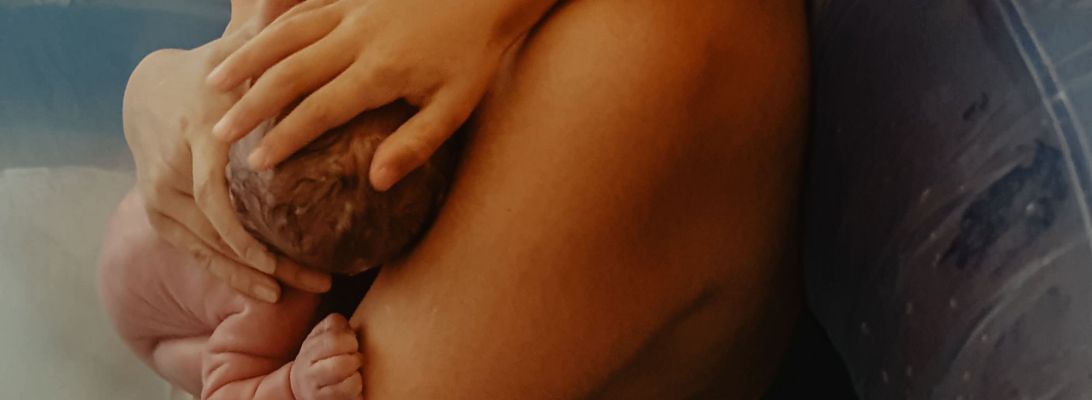
In terms of birth, what does this mean? We’re not constantly thinking about birth (unless you work in the field) or about how babies come into the world. We don’t actively consider the sacred period of postpartum days. We don’t consciously create a negative or traumatic birth. Why would we?

And yet, the percentage of women who experience birth trauma is rising. It is scary and getting scarier. The maternity services in this country (the UK) are deeply overwhelmed, understaffed, and failing. Arguably this is because of funding and politics and a lack of knowledge etc etc. However, I’ll go a step in a different direction here and say it’s also because we are so deeply conditioned in this society to think about birth a medical problem, a painful experience, and something that we have to survive.

We are conditioned from the moment our parents find out we exist; their thoughts and fears and joys about our birth will transmit information to us, in utero, about what birth is like. Then, our actual entrance into this world either confirms these beliefs that have begun to form, or it challenges them. Either way, beliefs are created- often in the last few generations they were not positive ones.

It might sound a little weird but if you get it, you really do get it. These imprints are the first of many foundational layers of our whole belief system. Every single second. Every single day. It’s all absorbed and filtered.

So then, we hear about birth, we hear screams of labour on the tv, or family and friends talking about the pain and trauma. We grow up with messages that birth isn’t beautiful, that it is bloody and breaks us, and so we fear it.

Generations have birthed under the controlled “guidance” of professionals reinforcing these views that birth isn’t safe or joyful or sacred. 

Granted there are exceptions, and someone will say that it’s “not all” but it doesn’t have to be all. It’s some. It’s a majority. And if you have any other racial or economic cards stacked against you, its even more.

Like I said earlier, we don’t consciously create a negative or traumatic birth. However we often do consciously create (also referred to as manifesting) a positive birth experience.  How? By filtering out the noise. By deconditioning our expectations of birth.

There are some radical revolutionaries out here doing this work. Deconditioning birth and postpartum, and inviting as many families as we can do the same. Those of us who have seen, heard and sometimes even felt the trauma that can be associated with birthing babies into this world; taking our experience and expertise and molding it into something we share. We are here, and we want better for our collective decendants.

We are here breaking the cycle. Saying no more, doing this sacred work of holding these spaces. Saying enough. Saying the conditioning stops here.

I invite you, regardless of where you are in the experience of birth – having had babies or wanting them, not interested in kids or somewhere in between – what are your beliefs about birth? Where have you been conditioned and where have you consciously created these views?

I’d love to hear.

With love,

Rohana x

Day 40 – Unbecoming

Did you know, doing something for 40 days rewires our neurobiology?

It’s stronger than a habit.

It’s why, many yoga practices, or meditations etc do 40 days…. its a magic number.

When I committed to these 40 days, I was feeling really unsure, given that our house move is now in 3 days, I knew it would be a push, but actually, it has been such a grounding gift to be able to reflect and hold space for myself. To show up and to say, even when I don’t want to, I will.

I adore writing. I adore reading too, though I do far less of it than I’d like.

I used to think, I’d need things to be on point or have a theme in order to show up. It has boxed me in.

Slowly the self-censorship shackles are being broken.

On that topic, last year, I set intentions around self censorship in my breathwork practice. I was feeling very caged in, and much of it was related either to my own self imposed ideas of what was okay or not, or from what I’d decided comments from those close to me meant. I was frustrated and angry. I wanted change.

My intentions were around letting go of self censorship that didn’t serve me. Allowing myself to step authentically into my voice and feeling able to speak my truth regardless of the voices around me. That didn’t mean to be cruel, it meant, I needed to tune in.

A year later… I’m reflecting on this and realising, the thoughts and intentions I protected out then are my reality now without any real planning. I crafted it.

I won’t lie – it feels fu*king good!

Change isn’t instant…. but it comes. This process has been an anchoring of that.

I won’t continue to write every day, not specifically here at least. But I’ve got some incredible ideas for more shares that have been inspired the past 40 days; and I will continue to share on other platforms.

I consider myself a writer.

Writing is a part of who I am… and when I write, even (especially) if it’s just for me, there is magick in those offerings.

I’m off to write some more pages of intentions… crafting my reality for next year .. and beyond. I’ll leave you with this, a note I had written for myself in May 2023:

Why do we put so much pressure on ourselves and expect change or transformation to be instant? It’s like asking a pregnant woman to birth instantly, without allowing her the process and labour of love and transition she needs in order to bring life earthside. Our instant culture is ruining us… choosing slowness and ease is more radical every day.

From my journalling notes

If you’ve stuck with me these past 40 days, thank you. If you’ve been around longer, thank you. If you’re only just showing up, welcome.

There are many many transformations coming. I’m stocking up on spoons to be able to share them!

I hope you know, whereever you are, you are loved. You are important. You are powerful. You are so much more than enough.

I’ll see you in a few weeks, with love,

Rohana

Day 3

What a rollercoaster day!

I’m showing up here, reminding myself that I’m committed, and also absolutely exhausted. The day has been filled with noise from my kids, and my brain is seeking quiet dreams. As I type, my 6yo is cocooned in bed, chatting to himself, and the others are finally snoring.

P has just told me that when he cocoons, its because he’s tired, or sad, or angry, or out of energy. It’s his way of saying, this is a way for him to feel safe, enveloped in the folds of the the thick blanket, he enjoys the comfort, and seeks it out when he feels things get too big, or when he wants rest.

His explanations never cease to amaze me, because though I have already understood this tool in his toolbox, he’s verbalising it to me, and that feels expansive.

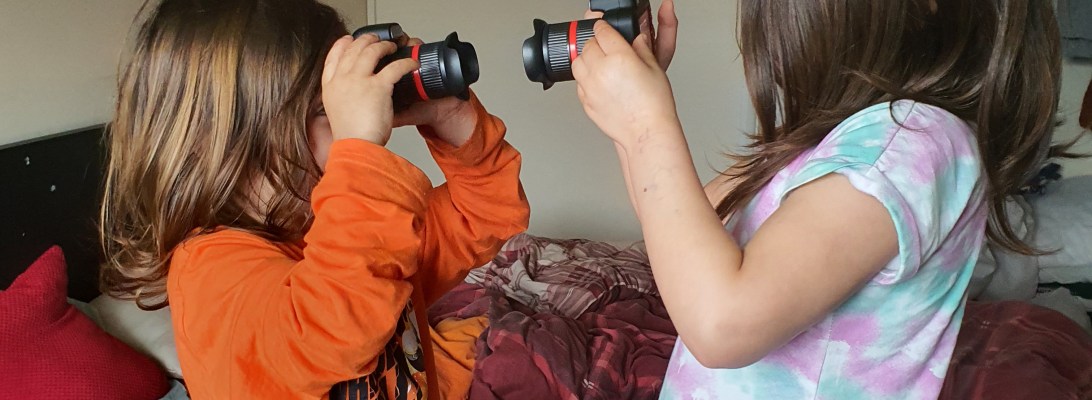
Tonight I’m thinking about creation. Specifically about the phrase create more than you consume. I bought the kids cameras after many many months of toying with the idea; and today they’ve been busy capturing all the things… around the house, each other, random shots and details, and of course lots of blank or blurry ones too. It has been so wholesome to watch, especially after our trip to Wales a few weeks ago, where they were all keen to have a go with my DSLR, and actually had a lot of fun posing for pictures and instructing each other from behind the camera.

It was the tipping point for me in buying these for them, and I’m really impressed so far, but of course aware that day 1 is novel, and so curious to see how they will stand the test of time.

They are creating… and seeing them create is one of the most interesting experiences of parenting so far for me. Seeing how they express their energy, create movement, games and different forms of art, each in their own way.

I find it strange to call myself a creative person, because through school I was often pushed to be more analytical, less creative, leaving that to the actual artists. Its something as I reflect on, I am determined to repair for my own children; because though I might not share much of what I create, I am essentially always working on some kind of creation…

From doodles to beaded animals, jewellery to nail art as a child and then teen, to now as an adult, cresting digital art, exploring watercolours, making t-shirts or posters, creating home ed resources or spaces in our home; and of course, art from behind my camera lens is one of the most powerful forms of storytelling for me.

Create more than you consume.

I hadn’t thought about our life in this way before, but I think we do… we are constantly creating, living in a dance of inner worlds, ideas, projects and plans. I’ve learned how to create more play with my children, and I see them bring new ideas to life every day.

We are creating, all the time.

It’s not a stretch then to think we create our reality… but that thought is for another day! I’ve got snuggles waiting with P.

💕

Oh, before I go, just for fun, have you created anything to bring you joy today? Can you? … go do it!

With love,

Rohana  x

3 steps to moving away from ‘Fight’ When our children trigger us

The word trigger is a buzzword on social media, so forgive me for using it here. Being triggered isn’t something to take lightly, and in various contexts, can be a life saving mechanism of the body. For me, here I use it because the word expresses the causal factor to starts the chain reaction from an event with our children, to the point where we react somatically. It is the first domino in the line … that often, though not always, causes a rupture in our relationship (this goes for parent and child, friends, siblings and even partners; all in their own similar and unique ways).

Before I carry on; I’d highlight that ‘Fight’ is only 1 of the responses that can occur; and in a series of writings this month, I will be covering the other 3 as well.

Picture this: you’re playing with your kid, they’re having fun, you’re relaxed, the atmosphere is easeful. And then, they make a noise, or do something to hurt a sibling/toy or break a house rule. It activates you – you’re body goes from peaceful and playful into anger. The action or sound is the first domino, and your anger is one of the next. Your anger is BIG, you might not say anything, or you might shout ‘no’ , look at them in angry way or do something like turn away – they sense the change in energy and they mirror it… and then you’re both angry, both upset, and after a shout or stomp their end, maybe even yours, you walk away… angry and puzzled at how something so minor became such an issue.

Your whole body is tense. Your nervous system is right up there in anger… your sweet little child, in that moment became a threat, and your ‘fight’ mode has been well and truly activated.

It isn’t because you want it to be, but rather because ‘fight’ is a body response to threat, and our brains cannot really tell the difference between actual threat and perceived threat. Add on probably years of messages compounded into our subconscious about what is okay and not, and our habitual response is to get angry and want to fight out of the situation.

Luckily toddlers are graceful, and we can absolutely rewire patterns that mean we change the way we react. Understanding where ‘fight’ shows up in our bodies, and acknowledging it is the first step.

For me, when I get mad (often when my kids fight with each other and rough play moves to attempts at intentional injury) I feel it in my hands and my throat. I want to shout, my belly tenses and my hands tingle. It is a sign that I am out of my rational brain and have moved into my amygdala, the primal response part of my brain, and my body is in survival.

When I fight, I yell. I shout and in my body have my own little temper tantrum… something I have actively worked on understanding, healing and changing for the past 4 years.

Before I understood this, my kids felt like little monsters when this happened. I couldn’t understand why but I would feel so overwhelmed and wonder how they were the same child… sometimes I fall back into this but its rare now; usually even in my anger I can see they are doing their best and the first domino could have been prevented if xyz had changed. So after the rupture, we tell a story, and try and figure out what needed changing; if I should have stepped in sooner or if we needed to redirect etc.

So if step 1 is finding ‘fight’ in our body, then what comes next?

Step 2, is accepting it. Easier said than done, but it truly is essential. Anger is our somatic experience of boundaries being crossed or pushed. It is the way our bodies are communicating with us, well before we have fully processed what the first domino was. When we accept it, we dissipate some of the energetic charge it holds. We feel it, allow it, and then, as if by magic, being seen/felt/acknowledged, the heaviness lifts and we can change it.

That’s not to say don’t ever go back, feel and heal as needed, but in the moment, when we want to avoid major ruptures, or just know that now is not the time to explode because reacting in an adrenal response isn’t really the ideal form of parenting (unless it is because there is actual danger – in which case, ABSOLUTELY react! Get your kid out the road, away from the ledge or whatever other danger may be present) and moving into a grounded space is a band aid, but it won’t address the root of the problem. To do this, requires deeper, intentional work, not an in the moment kind of medicine. The bigger healing comes in many forms, and though I have my preferences, there is no ‘right way’.

Step 3 then, is MOVE. Make our bodies shake, laugh, dance, get out the room, squat down to a toddler/child level, bounce and then look at them to listen; stretch upwards and take breaths to feel your chest expanding as much as is comfortable, or, do anything that allows movement. Sometimes this means saying out loud “wow, i have some angry energy, I need to shake it out, can you help me?” which is especially effective with younger kids because it both affirms that it isn’t their fault, and it gets them learning how we can healthily change the tone of a conversation. I don’t have a 1 size fits all, but movement is my tried, tested and absolute favourite way to change energy away from anger and fight, into a space where we can build connection, repair if needed and work through whatever boundaries need to be asserted.

On a good day, I use this without even thinking, making a game or changing the play to include more movement for everyone. On a harder day, it takes intentional pause, feeling the feelings, saying sorry for yelling and making a choice to walk, move and make changes to whatever is going on. A bonus is getting outside in the sunshine if its available, or taking a bundled up walk to find something cool – again, way easier with younger kids, but not impossible with older ones; a walk to pick up a favourite snack, dinner ingredient or catch some pokemon or whatever thing they are into works as well.

And that’s it, 1, 2, 3. They are simple. They are accessible. They are also really hard to remember in the moment, and it takes practice (just like life).
Raising Humans ~ A poem


My child is not a toy
Or a blank slate to be molded
My child is not bad
Or naughty to be scolded

His sister isn’t mean
Her brother isn’t rough

They’re humans learning to live
And life can be tough

We criticise children
Without giving them their dues.
Children are among the most oppressed
Of our society – though it’s not news.

We don’t respect them
We constantly correct them
We tell them to stop, don’t talk
We make them walk
Even when their tired

Our children’s childhoods
Are endangered
And it’s definitely our fault
Somehow we’ve forgotten
We’re raising humans
And so we default,
To old age tactics of shame and blame.
To bribery and tears.
We seem to think our children won’t be scarred,
By us belittling their fears.

My children are not blank slates
Or performing monkeys doing tricks
And neither are yours
Or yours.
Or yours.
They’re humans
And raising them is politics.


Connection, Causal Comments and Costumes of our Life

I wrote this more than a year ago … for some reason, I thought it wasn’t right to share at the time. Perhaps because I felt raw from the day, or perhaps because I got busy … either way, I’m sharing it now. Because as I read it back, I realised just how much I needed my own words today… and I am so immensely grateful that I have this space to write.

With love, from a past version of myself xox

” I was on the bus today, and of course, bus trips mean lots of people. Always opinions, some lovely, others not; but more recently, as I’ve been building up to solo trips with the kids again in the better weather, with them all being older, and E, now 20 months having lots more opinions about the buggy; I’ve thought about how we use the time travelling to connect.

Today, we played I-spy, our version of the game, using colours instead of phonics, and sometimes throwing in the odd shape or physical reference like ‘tall’ or ‘wide’ instead. The kids sat, and looked around, and E started to whine because he was strapped into the buggy. Luckily, another mum got on, and the connection between him and her daughter began, until he fell asleep!

We (mums) chat for a while, talking about kids and coping; she shared some wisdoms about being a mum of 7, and I shared some frustrations about villageless parenting. We connected – over the shared experience of splitting ourselves into multiple pieces, stretching so our children could have parts of us, and simultaneously loving the chance and choice to do this, and being exhausted by it. I told her I thought her family must be beautiful, and I admired her honesty. She told me that it gets easier and harder, affirming that no choice is right, but that we do what we can with the knowledge we have.

A brief, meaningful chat, interrupted by a gentleman getting on the bus and sitting down adjacent to my older 2. “you’ve got your hands full” he said gruffly to me.

“Oh I really do” I replied. “Full of love with my amazing children”.

“Uh, not all the time I bet” was his response!

The other mum looked at me and we shared a moment of horror at the roughness in his voice.

“They really are amazing” I told him. It was our stop. We left.

And once again, I thought about connections. Some positive, some negative, all, inevitably will have an impact on our energy fields. Why do some people feel so harshly about children? Why do they judge when there is more than 1? What did he gain? What was so triggering for him? I wondered aloud a little, with the general cautionary calls to my kids about the road. I thought about how hard it might be for some people to see kids being so free and confident, when they might have never been given the chance to be so.

I wondered how my children felt. Though they know we’ve had these comments and conversations before, so they said they were hardly ruffled, more interested in the scrap metal yard instead. But how does this impact children? How do we make them feel when we comment about how hard they are constantly?

What message do we send when we say, I’ve had enough of you? Because in most instances they never get to say that to us.

Thinking about my children, and the brief beautiful encounter with this lady, I remembered a quote I’d read in an email this week by Rupaul that “You’re born naked and the rest is drag”.

Kindness costs nothing.

The appearances we choose every day impact every single human around us. We are born naked, and needing others to survive… as we grow we create costumes for ourselves every season of life… and yet, when we die, we return to the earth .. dust. The short space of time in between, in the costumes we choose may be brief, but it is so powerful.

The lady on the bus today gave me hope… and it was thanks to her, that though the gentleman’s words stung, I could brush them away, and hold my babies close. A year ago, I might have been brought to tears (probably would have!). Thank you, whoever you are. I am grateful.”

That’s it.

That’s the post. A short meeting that left a big impact.

Whatever your day looks like. Wherever you are in the world. I hope you know this:

You are loved. You are important. You are so much more than enough.

Good Kids Communicate their needs

When I wrote the title of this piece, I cringed! It’s inspired by the continuous discussion and questions asked of parents, about whether or not their children are good, because they don’t cry a lot.

Good? Really – what makes a good kid? Is there a set criteria? It’s something I’ve been think a lot about recently, and definitely something that carries so much weight and pressure, as adults who were raised with the notion that good is desirable and that anything else would be ‘not enough’. From a generation that was manipulated into behaviours that got us rewards, the notion of a good kid comes with a hefty price.

But bear with me. I don’t actually think that only ‘good’ kids communicate; instead, its about a sense of safety.

If communication is required in some form, to allow meaningful interactions with others around us, then communication, whether through spoken language, body gestures or other forms non-verbal interactions is a cornerstone of our existence. Therefore, it stands that I will assume, communication in ANY form, is the way that kids communicate their needs.

The caveat here, is that when kids are responded to, they continue to communicate – thus falling into the ‘good’ category (i.e. safe); whereas if they are ignored, neglected, or pushed away, these children often learn that their attempts at communication are a waste of energy – and energy is a precious resource.

Good kids, are kids who, despite it being unpalatable for their grown ups, are safe enough to continue their efforts at communication – they are SAFE in the knowledge that at some point they will be responded to. And so they persist.

But still, society asks if our children are good. They are praised for not crying on an airplane journey. They are hushed when they upset on a bus. They are given screens in public places just to avoid embarrassment; and if this isn’t an option and they act up, they are often labelled ‘naughty’ or ‘bad’ or something equally as ridiculous – either by passers by, or by overwhelmed parents who just want to get out of the situation, often being triggered by the fact that we have been conditioned into the unacceptability of these outbursts of noise. We sometimes even hush their joy for the same reason – fearing it will bother people around.

But it is an outdated idea that good kids are quiet. The notion that good children don’t cry, is actually more telling of the society around us, the expectation that kids should be seen and not heard, that kids – despite being so dependent on us – should never cause inconvenience by crying, or communicating that they require something that puts us out.

Not all kids will do this. Some will, in a last ditch attempt to gain the response, acceptance and love they crave; be extra loud, extra hyper, extra – everything; and again this isn’t effective communication, because they haven’t felt safe.

Truly, as we learn more about children, the way they communicate with their voices, their bodies, their cries. The way that they play and process, and the way that they marvel at the world with eyes so bright – all of the time, communicating. The way that we respond matters. Safe kids, will communicate their needs.

Quiet kids, are often quiet because they don’t feel heard, or feel like they shouldn’t be heard. They have internalized that nobody is going to respond; and so make sure to take up as little space as possible – often becoming adults who do the same and cannot set boundaries, honour their needs or even understand why it’s so hard to communicate with peers/others.

So what makes a good kid? Is there a set criteria?

I don’t think so. I think, though it’s hard, the question we should be asking is about those raising them. What makes a good parent? How do we respond to our children to let them know, even if we don’t fully understand what they are telling us, that we value their communication? What do we do, even when we don’t approve, that let’s them know, all communication is valid, all their needs and wants can be heard, even if that means we say no.

What do you think?

As ever, thanks for reading,

Rohana x

Overthinking Play

Play is a vital part of childhood. We develop most of our early skills through play and so allowing my son a variety of ways to play is currently a top priority.

This one is simple really, I just wanted to share about the way we play. Having a 2 year old means a LOT of testing, and sometimes it’s not always possible to spend every single minute involved in their play.

There is housework, cooking, showering, going to the loo etc etc etc. Some things, there is room for my toddler, even if I don’t necessarily want to share; for example, I have given up attempting to have a wee without either being followed or demanded down the stairs again. However, when I am cooking or washing the dishes, the boundaries are firmer, he is NOT allowed to put his hand in the hot water, or play with the oven dials or use a knife. Simple right ? Unless you are a 2 year old who feels like the world is overwhelming and unfair and Mummy never lets you do anything interesting!

It’s hard being a toddler. And I say that sincerely.

Honestly I would love to stay on the floor or sofa and play all day. Some days we do that, and have left-overs or daddy makes dinner. But other days it’s impossible. Instead of ‘dealing with a screaming toddler’ though, I try to find ways we can adapt situations so he is busy while I am too. It doesn’t always work, but even 50% is better than nothing. Extra bonus, it gives me something to explore with him another day or ask about before bed.

These are some of my recent play set ups. I haven’t used them all yet, and will fully confess that a lot is inspired by various Instagram accounts who are much better at this than I am. Regardless, what we are doing works for us right now so that’s all that matters to me.

Play is hard sometimes. I tend to expect something from it or for TP to want new things, but often he’s happy to repeat crafts we’ve done. Letting go of expectations is something both H and I are working hard on. Child led can be challenging. The results are worth it, in time.

How do you play? Are there any prompts you’d like to see or try? Send me your thoughts and ideas, I’d love to hear.