
12 Month Sleep Regression

The last few days have been a roller-coaster. I process a lot when I write, and though in the moments of hardship I didn’t want to look for learning, I know that there were/are some, and so in finding them for myself, I want to share, in case any other mum feels the same. If you do, let me know I’m not crazy please – it can be a weirdly lonely road sometimes.

Theo Prana was sick over the weekend and into the start of the week leaving me sleep deprived, and mentally exhausted. I had a couple of meltdown moments and when the offences of screaming and fighting sleep continued, I began to see my child as an enemy. In my crazy haze I had a distinct moment where I fully understood why mothers sometimes just need to walk away. But of course, most of the time we don’t. I didn’t. I held him and we played, and he cried and he boob-fed, he pushed away and crawled back to me, and though there were moments where I felt entirely done, they did pass; because ultimately I made myself remember that as hard as this experience was for me, it was harder for my baby.

My parents were great despite my snapping at them; they took Theo Prana with the best of intentions – to give me a break – but actually I found that it didn’t help me as much as they hoped. Some of the best advice I’ve had since becoming a mum is that “if it hurts your heart, you don’t have to do it.”

I’ll repeat that:

“If it hurts your heart, you don’t have to do it.”

It’s such simple yet profound advice. On the 3rd night of this, my heart screamed at me for letting my son cry out for mummy … I’m not perfect, nobody is, but when I stopped and listened to my heart, I promised myself that I would do better. I felt like I was essentially letting him “cry it out” but instead of a cot, in someone else’s arms. I reminded myself that for this tiny human, I am the only constant, and leaving him in distress was like abandoning him.

I made a resolve the next morning as I rushed to get ready, that I was going to quit my job. I only had 8 days left anyway. I typed away these initial thoughts in my free moments and was number crunching in the others. I took the week off, but I’ve left next week in the air. Why? I think because as much as I hate leaving him, the few hours of solace, even though I’m busy, have allowed me to breathe. The resulting problem is that I feel intellectually stifled; but as my last blog post shows, I’ve resorted to TED talks for some inspiration. Actually, as I got on the bus I googled 12 month sleep regression, because I can’t understand how, even though he’s not well, his sleep has gone so entirely AWOL; the answer, I’ve found is that there is a 12 month, and 18 month and a 24 month sleep regression stage.

DSCN0043
My son at 2am – apparently it was playtime!

Why does nobody tell you this when you’re pregnant? I swear if we actually talked and normalised this shit then maybe mums wouldn’t feel so alone or crazy when it happens. It has left me feeling very frustrated, but now that my little one is a bit better (and has allowed me to sleep a little bit) I am turning that energy into something productive: research. 

I have learned a fair amount about sleep regression in the past few days, both from personal experience (though I may be in for much more of this) and from my reading. I’ve linked some useful websites down below under “Resources” but am also going to list a few take-away points.

  • “The term ‘sleep regression’ is used to describe the periods of time when your baby who otherwise slept through the night suddenly begins to have uncharacteristically frequent night wakings, and may even have napping issues. ” ~ Kim West

One article I read talked about this as a sleep “progression” not regression because our babies grow and learn more during these times – it doesn’t yet feel like it, but the sentiment is great! Anyway, here are my findings:

  1. Sleep regression usually means that our babies are reaching milestones, so the neuro-pathways in their brain are being created and reinforced – hence the increased wakings, higher levels of hunger AND grumpiness.
  2. Babies/toddlers tend to be very clingy in these days/weeks so try to enjoy the cuddles – they won’t last forever.
  3.  You’ve done nothing wrong! – I was blaming myself a lot, trying to figure out what I’d done to make this happen… but really, babies sleep regress, and they get sick.. and sometimes both at the same time – it’s not as abnormal as it feels!
  4. They are common but not all babies/toddlers go through them, so if friends or family tell you their kids have never done this, don’t pull you’re hair out (tempting as it might be), just smile and nod, and remember that this is normal.
  5. Let them eat more – and if you’re breastfeeding, I suggest eating more yourself too! It’s exhausting making milk all the time and you need the extra energy so you can keep providing for your little one.
    • If you are trying to wean, a few sources I read suggested waiting until after your little one starts sleeping normally again.
  6. Remember “this too shall pass” and pull in as much support as you can. Sleep will (apparently) come again… the less we fight, the sooner it’ll happen.
  7. Research suggests avoiding cutting down from 2 naps to 1 at this age because while our babies may fight it, they need the sleep (and so do we!). For us personally this sometimes works and other times doesn’t but we don’t have a real schedule anyway so we’re just going with the flow.

DSCN0066.JPG

I have already seen that my boy is growing and is more confident as he cruises around so I’m sure the experts are on to something. It’s hard, like many aspects of parenting, and sometimes social media and the internet can make us feel like we are the only ones going through these moments; but both can also be great tools of connection, positive reinforcement and normalisation.

We aren’t alone, we aren’t crazy (mostly), our babies are normal and healthy, and we will sleep again.

Thanks for reading. 

Xoxo

R

Resources: 

https://sleeplady.com/baby-sleep/sleep-regression-just-a-phase/

https://www.isisonline.org.uk/

http://wellbeingkid.com/handle-babys-12-month-sleep-regression/

http://kindmommy.com/12-month-sleep-regression/

http://www.pinkymckay.com/the-myth-of-baby-sleep-regressions-whats-really-happening-to-your-babys-sleep/

https://sleeplady.com/baby-sleep/12-month-sleep-regression/

Turning to TED

Hi Everyone,

This weekend my son has had a rough few days, teething plus swollen tonsils have left him feeling pretty crap! As a result, I haven’t had much time to sit and write. Admittedly, I’m not sure what I’d have written about because after a couple of days with him in pain, I’m feeling uninspired and a little useless. Obviously this too shall pass, but anyone with babies knows, when you’re in the moment, you just want to make it better for them.

Today I decided to pick myself up and motivate myself, because starting off the week well is important. I’ve opened my laptop and found myself listening to TED talks… not ones to inspire, but ones about parenting. I listened to a lot of these when I was pregnant, but somehow I’ve looped back and am listening to them again and I find a whole new appreciation for them.

I have binge watched a few now (baby’s had a long nap) and so I thought I’d share the ones I liked (links below); for anyone who needs to get our of their own heads today:

For Parents Happiness is a Very High Bar

  • Talks about the economics of parenting
  • Talks about preparing kids for the future
  • Talks about the crisis of parenthood, which often leads to the crisis of marriage
  • The issue of work-life crisis
  • The conflict of wanting children to be happy… and the harsh reality that there is no real way to teach this

How to Raise Successful Kids – without over parenting

  • Talks about academic pressures and parental praise
  • A checklist childhood

What we Learn Before We Are Born– I loved this one when I was pregnant!

  • Talks about how babies learn in the womb
  • Talks about the mother’s voice travelling to her baby while it grows – and the language it will be born into
  • Talks about food preferences

What We Don’t Know About Mothers Milk – This is informative and funny!

  • Talks about the time and effort it takes to produce milk
  • Talks about support systems for mothers and babies
  • Talks about the components of breastmilk – as food, medicine, hormones, comfort etc
  • Talks about how society fails mothers

The Lies We Tell Pregnant Women

  • Talks about the objectification of women
  • Talks about dismantling systems of inequality to help raise our kids in a better world
  • Talks about sexual behaviours of pre/postpartum couples (particularly focusing on women)

There are literally hundreds of talks I could share but these are a hand-picked few. 

Enjoy xoxo

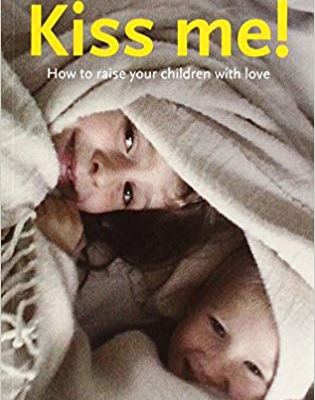
Review of “Kiss Me!: How to Raise Your Children With Love” Carlos Gonzalez

Not having read anything unrelated to my degree for what feels like forever, picking up a book and reading it cover to cover has been a refreshing change. Albeit a parenting book, it was nice to break the trend of picking up a book to find only what I needed. I loved it so much that I wanted to share my thoughts with you.

First Impressions:

The cover of the book is honestly not my favourite, but it gets the message across of 2 happy children. Snuggled up, when I look at the cover it speaks of comfort and security; both of these are vital to the content of Gonzalez’s book. kiss me

I opened the book intending to read a couple of pages while my husband and baby slept. Before I knew it, I was a chapter in, and my little boy woke up wondering where I was, so I closed my book and went to comfort him. I distinctly remember wanting to climb back out of bed once he’d fallen asleep because I was so taken in by what I’d read. I loved the introduction where Gonzalez makes clear that this parenting book will not advocate a “one size fits all” style of parenting; rather he made me as a reader feel that he would discuss my child as a human being, with individual needs and a unique personality.

In short, I opened the book and was blown away.

Content:

I won’t go through the entire book but I will point out a couple of key examples that really struck chord with me while reading. Gonzalez discusses various subjects in his chapters, from co-sleeping and breastfeeding, to toddlers playing in the park and the Oedipus complex! The content of the book is extremely varied, which to me shows an honest reflection of parenthood; illustrating all the things parents may consider in the first years of their children’s life.

He cites other authors and specialists, both whom he agrees with, and whom he doesn’t. This was a huge selling point of the book for me, because it’s not just some random opinion, but rather an opinion that also has research to support it. Of course, as Gonzalez demonstrates, there is a lot of research that goes against what he suggests too.

A particularly prevalent example in my life at the moment is the issue of sleep training.

Gonzalez criticises harsher methods of sleep training, such as the “cry it out” method, advocating a gentle approach. He explores the reasons why children do not like to sleep alone, and assures parents that it is normal for their child to wake in the night, or want to sleep in his parents bed.

Similarly, he asserts that far from manipulative or terrible (I refer here to “terrible twos”), children are selfless, generous, forgiving, honest and understanding.

Fundamentally, Gonzalez argues that as a society we treat children with little respect for their own personalities and autonomy, punishing them, verbally and physically, in ways that we would never do to an adult.

One of my favourite examples in the book relates to injustices towards children that would not be accepted in adults.

Gonzalez presents a scenario of a male and female where the male punishes the female for acting out of turn. Firstly the scenario is considered with the male as a father figure and female as a child; secondly with the female as a teenager, and thirdly with the male as a husband and female as his wife. Gonzalez asks his reader to sit with how each scenario made them feel and reflect on the social acceptability of it. This almost interactive style with the reader which is prevalent throughout the book, allowing the reader to feel a part of the discussion.

Recommendation:

I wholeheartedly recommend this book to any parent, and to anyone who interacts with kids frequently. It has been such an eye-opening, heart warming book for me to read; it has given me the confidence to listen to my instinctive parenting choices more readily, and disregard comments that criticise my parenting style. Gonzalez has encouraged me to think about how my words and actions have a deeper impact than I had realised, building on the knowledge (and reminding me of it) that I gained from Studying the minds of babies when i was pregnant.

Thank you for reading 

Xoxo

R

1 Year of Boobing

As a breastfeeding enthusiast I thought I’d take the opportunity of World Breastfeeding Week to share my journey highlights and struggles, and add in some breastfeeding facts.

I fully support ALL women and mums, we all do our best with what we can, and we make choices based on what we feel is best at the time. Nobody should feel guilty for the way we raise our children. That said, 73% of women in the UK start breastfeeding, but 56% of them stop within the first 3 months. If it’s “the most natural thing in the world” then why is this the case?

pie-chart_1024x10244487478509030129166.jpg
Source: Bravado Designs

Unfortunately, though the image gives a number of reasons, I cannot answer my own question. What I can do however, is raise awareness; share some facts, talk about my experiences AND I can cheer you on because even if we’ve never met, if you want some support, I am 100% willing to give it.

Breastfeeding is HARD. Actually, being a mum in general is hard – but your baby still thinks you’re the best, so keep going. You’ve got this!

5 Breastfeeding Facts:

Fact 1.
Women all over the world breastfeed, regardless of their diet. 99% of women can physically produce enough milk for their babies provided the relationship between mother and child is not interrupted (I.e. child is demand fed to establish good supply).

Fact 2.
After birth colostrum is produced (yellowish coloured milk) which lines the intestines of a newborn baby. Colostrum is highly concentrated with immune factors to help the baby mature.

Fact 3.
Breastfeeding is environmentally and economically friendly. No bottles mean no waste, and also no expense. Breastfeeding is free, and it means you can go out and not worry about taking “food” for baby because it’s already with you.

Fact 4.
Mum’s are healthier. Breastfeeding increases the speed of which the uterus shrinks back down; it lowers risks of breast cancer and ovarian cancer and protects against osteoporosis. It also delays periods returning!

Fact 5.
Breastfeeding isn’t always easy. Support is needed, sometimes positions need changing, sometimes baby has tongue tie. There are always hard days but support from partners and friends goes a long way.

There are many more, I’ll list some sources below, but talking about facts doesn’t always make things relatable. Talking about experiences does. My journey has been interesting, and it’s got better with time. Here are 5 of the many different moments that have stood out for me:

1. When my baby boy was born I had this perfect image of him still connected to his cord, placed on my chest and latching instantly. Instead, he was too tired to latch, I was exhausted, disoriented and losing blood, and I felt like I had already failed because I wasn’t mentally present for the first moments (and hours) of his life.

I know now that: Not all babies latch straight away… Labour is hard on them too so sometimes they just want to sleep.

2. Cluster feeding in week 3 almost killed me. I would be up all night, feeding and rocking him, standing up because if I lay down I’d fall asleep (and sitting was uncomfortable). I distinctly remember 1 night where I thought about giving up – maybe I wasn’t producing enough milk? Maybe he was just hungry? Maybe with formula he’d be happier? I understood in that moment why so many women, especially those who do not have enough support or information, pack it in and switch.

I know now that: Cluster feeding is when babies feed frequently, often it feels like they never want to come off the boob, because they are growing. It can also happen if they are teething or unwell and want comfort.

I also know that a week later my baby’s feeding had improved so drastically that I felt like a new (free) woman. Sticking through the first month was a challenge but it did get easier.

3. I had fountains of milk! I would go out (or stay home) and he’d latch, start the flow and then come up for air… and milk would spurt out of my nipple and everywhere! It’s funny to think about but I do remember feeling frustrated and embarrassed at points.

I know now: Supply sorts itself out after a few months and then this stuff doesn’t happen so much. Baby doesn’t care and most of the time nobody’s paying attention so it’s not as big of a deal as it may feel. Have a muslin square around just in case though!

4. Biting was a huge fear! It happened (and sometimes still does) but rarely. Once teeth started to cut, if he bit me I would put him down and he soon realised biting meant boob would be taken away.

There’s not really much I learned here, just that it’s normal but cutting teeth doesn’t mean they can’t be gentle, it just requires a new learning for them.

5. Boob smiles! Every mum knows this one and it still melts my heart. The cute smile while they feed or the giggles afterwards – makes it feel like there’s some magic in the milk!

Again not really a learning, but definitely a highlight (for me anyway)!

This is us with Theo Prana at 7 months, feeding to sleep.

There is no question that breast milk is the prime source of food for a tiny human, but whether you breastfed for 1 day, 1 month, 1 year or until your child weaned naturally, there should be no guilt or shame involved. We all do our best.

Thank you for reading. If you are a mama in need of a little encouragement or if you just want to say hi, drop me a message. I’ll cheer you on!

Xoxo

R

Resources:

https://www.laleche.org.uk/

https://www.nhs.uk/conditions/pregnancy-and-baby/your-breastfeeding-questions/

https://www.breastfeedingnetwork.org.uk/breastfeeding-help/

http://www.who.int/topics/breastfeeding/en/

Surviving the First Year of Parenthood; Long-distance

This week Theo Prana and I had a beautiful week with H. He visited Gibraltar to celebrate our baby boy’s first birthday, and though we didn’t really do a very big party

received_11231832544974111617295581115062.jpeg

or even get him any gifts, the fact that we were together was enough. We decided that since Theo doesn’t really know what birthday celebrations are yet, and he has so many clothes and toys, that just spending time together and making memories was more important. My dad had his camera on him, and I have recently picked mine up too, so the days have definitely not gone undocumented.

H and I spoke about lots this week, and before he left, I asked him to send me something small about his first year, and how, despite the distance, he’s managed it. It’s the first time he’s ever had an input into this blog, but hopefully not the last! The content is his, but the words are mine… he was in Scotland while Theo and I were in Portsmouth.

Here are the 4 ways H survived the first year of fatherhood:

1. Video Calls! Lots of them, through Facebook, Whatsapp, Skype or any other form of social media. Video calling made a big difference, even when there wasn’t a lot to say. Sometimes it was just nice to be able to have the line open and watch, but other times, just watching was harder than having no contact.

2. Photos. Having a wife that doesn’t put her camera down helps. Getting bombarded with photos meant seeing what they (baby and R) had been up to. It allowed me to be involved and included even though I wasn’t physically there. *

*Or when we are together, we get snaps like these!

3. Being busy. This meant doing anything that kept my mind ticking; diving in head first to things that allowed me to forget about reality. Often this was games (much to the annoyance of my wife!) because they kept me sane.

4. Being with people who get it. My job allowed me to be surrounded by other people who understand the harsh reality of long distance relationships, and the difficulty that comes with being away from family. The situation was still not completely normal, but having some of it understood helped.

My lack of understanding about the reality of long-distance parenthood has proved a topic of contention between H and I, but this week, I feel like after many many conversations, I feel like we are on a new level. I am in Gibraltar for a few more weeks while I work, but will soon head home, closing the distance once and for all.

Thank you H for allowing me to feature you on this post, and thank you to all of our family, friends and extended village, for the continued support.

Xoxo

Gratitude at Graduation

A week ago I walked across the stage, officially graduating from the University of Portsmouth.

The past week has been filled with lots of nostalgia, a bittersweet feeling of goodbye, and a lot of gratitude. I thought that I would write and reminisce about my time at university, detailing different memories; but honestly, that’s more for my private journal than here. Instead, I want to share the best 5 things that came out of my university career.

Number 1

I got educated. I don’t mean academically, though of course that happened too; I mean I got an education that wasn’t possible living at home, in my small hometown.

I learned how to live alone, how to shop for myself, how to pay bills and how to figure out what my next meal was gonna be.

I got educated through my friends, learned about different backgrounds, and explored the labels I had given myself and other people. I have bettered myself through this education, becoming more open-minded and progressive in my thinking and lifestyle.

Number 2

I made friends. This sounds like a cliché but having had close friendships end very sadly before university, I wasn’t sure I’d actually manage to fit in. Now I have come to accept that I will never fit it, but that I can still have the most amazing friends.

I have had some rough patches and been close to people and then drifted, but I know that there are a few really great friends, who I can count on, call and who I hope to stay in contact with for many years to come.

Number 3

My Family. This is a long one, because there are a few parts, and it’s the most personal.

I) I got married. Admittedly, this isn’t a goal or reality for most university students in their early 20s but it has been my reality and I wouldn’t have had it any other way.

Working on my relationship with my partner has been one of the biggest challenges because being away with our son, while he worked to support us, meant that we have almost never been on the same page at the same time. I am grateful that he encourages my madness and ambition, and I look forward to actually spending time as a family soon.

II) I had a baby (I know this isn’t most people’s goal either!).

My son has taught me more than I can write here. I have learned about motherhood, about myself, about food, and babies and toddlers. I have learned that more often that not, my instinct is right. I have functioned sleep deprived and I have celebrated every small milestone he has had. I was told once that these things matter more to mums than dads but eventually they don’t matter; but I know that they do matter.

III) I began to appreciate my family (blood-family) very differently.

My relationship with my parents has evolved drastically since I left to university. I left, sad but excited to be moving away, but over the years, even before my baby arrived, I saw home in a very different light. I know that I have some of my biggest supporters in my parents and brother. My mum and I have an exceptionally close relationship, and I am incredibly close to my dad. My little brother and I don’t always see eye to eye but I cherish him dearly and I know that our relationship will grow once he leaves for university too. I see how hard it is to run a house now, and the dedication I somehow previously took for granted, and I have begun to understand what I want to make my own home like with my husband and our baby now.

Number 4

I learned my voice matters. This is a big one for me. While I have always been a vocal person within groups I know, being at university taught me that as long as I can back up my opinion, I cannot be wrong.

I am not always right, far from it, but that doesn’t mean I’m wrong. I have learned, and am still learning that there is literally always going to be someone who disagrees with me, but it’s not my job to please everyone.

Being at university has given me the confidence to stand up and be vocal about what I believe. And to, where reasonable, call people out on their bullshit too.

Number 5

Lastly, university has taught me to believe in myself. Another cliché I know, but it’s true! I have overcome obstacles that I never imagined facing, and I have learned that hard work really does have incredible results.

I took part in a lot of stuff at university, I made friends, I broadened my views and I swallowed some bitter pills too. I have friends who have faced incredible trauma and adversity through their university career’s, and I have others who have seemingly had life handed to them. Each journey has been different, but none less important than another. My journey let me to graduate with a 1st Class Honours in Politics and International Relations, alongside being awarded (jointly) a prize for “Student of the Year” within my faculty.

20180717_143856_001131089836092375037.jpg

I proudly celebrated with the most important people in my life, and I had an amazing day. I am so incredibly grateful for the opportunity’s I have had, and I know that there are many more experiences to learn from, both within academia and outside of it. Every single person I have met and interacted with has helped shape my future to be what it is today, and I am so thankful for that.

Thank you for the support. Thank you for the inspiration. Thank you for the opportunity.

xoxo

R

Yogas Chitta Vritti Nirodhah

Hello lovely reader,

I am currently taking a Raja Yoga Teacher Training (in slow motion because of my travelling tendencies), and wanted to share my essays as I write them. Yoga has helped me in almost every aspect of my life so far, and so I want to share these teachings and make them accessible to others.  My beautiful teacher Nalanie is working with me one-to-one, to help me become the best teacher I can be. 

With much love xxx 

R

Introduction:
Yogas Chitta Vritti Nirodhah is, as Swami Satchidanda says, the Sutra that encompasses all others, and for a keen student, it is enough; all the following ones are expansions and explanations of this one Sutra. For the purpose of this essay, two interpretations of the Sutra will be considered, followed by a personal analysis of the Sutra (this analysis will contain first person narrative). Before exploring this however, it is important to note that a Sutra is a “thread” of wisdom, passed down by Sri Patanjali to his students through oral teachings. The intention of the Sutra’s, as understood by the author, are to guide yoga practitioners by providing a reference for them to return to, similar to the 10 commandments of the Holy Bible. All the Sutras are shorthand notes, often meaning that they form no complete sentences. In this instance, the literal meanings of the words are Yogas (yoga) Chitta (Conciousness/of the mind-stuff) Vritti (Modifications) Nirodhah (Restraint); made into a tangible phrase, it is translated into “the restraint of the modifications of the mind-stuff is yoga” (Satchindanda, 1990, p.3).

Definition A:
According to an article in the renowned magazine, Yoga Journal (2007), an understanding of the consciousness referred to by Patanjali in this Sutra allows an easier path to navigate through life. The Chitta is filled with content from everyday life, through the senses, content enters the mind, and it is like a constant turning wheel. These thoughts, opinions, memories and feelings are easily identified with, as they relate to the physical realm of being experienced in this life. However, the Chitta has two elements to it, the content it is filled with is merely a filter, the second element is the Seer (Drashtri) which is the lens for the Chitta. Without the lens, the filter would be useless. In the same way, without the Drashtri, the content experienced by the Chitta would not be of any value, because the content would not be seen.

Definition B:
Joshua Michaell, a Psychotherapist with a yoga-based counselling practice asserts that his initial understanding of Sutra 1:2 was similar to many others, the idea that yoga is about stopping the mind. However, Michaell discusses that in reality, Sanskrit does not allow just 1 translation, but rather is open to multiple interpretations, allowing Patanjali’s sutras to also have a multitude of explanations. This is the beauty of Patanjali’s work. Michaell discusses the etymology of the Sutra, an incredibly interesting speciality, eventually proposing his own translation, that “yoga is the process of selectively eliminating habituated thoughts, patterns, identifications (occurring), within the field of all that can be perceived.” He further suggests that having this more relaxed definition allows a practitioner to be more compassionate with themselves within their person practice.

My Analysis and Conclusion:

The first definition discussed provided an interesting insight to the idea that our chitta is composed of two elements inextricably linked. I particularly like the stance that the sutras provide us a way to navigate life, but the second definition for me provides a much greater take on this. The Sutra’s as threads can be woven to fit each of us in our journey, and every time we return to them, I think we can find them different, sometimes we learn more, and sometimes our understandings change; the possibility of multiple interpretations of yogas chitta vritti nirodhaha, along with all the other sutras, then becomes more inviting, especially I think for a beginner. Personally, I like the definition given in Swami Satchidanda’s translation, however, I can resonate with Michaells translation too, as a stepping stone.

I think as a definition of yoga, Sutra 1:2 allows anyone to access it. For me, it is about taking moments of pause to restrain my mind from acting like a whirlpool caught up with trivialities of daily life. Personally, practicing this restraint of mind means to cease gossip or avoid it through changing the subject, to send blessing and light to those who I like but more to those I dislike or feel upset by and also to hold back a short temper and repeat ‘Om Shanti’ either inwardly or out loud; admittedly this last one is a practice I am working on but find the most challenging. These are small practices, but they are my way of modifying my mind now, and I understand this Sutra to instruct. I think that it asks us to work daily on our minds, to restrain them and to love them, in whatever way is possible.

Sources:

Tornado Brain

Yesterday, after mum’s yoga class I got this message:

“The many faces of Ganesha reflect how you feel about the different aspects of your life – spirituality, health, finances, relationships and emotional wellbeing.

It is important to remember that circumstances are not good or bad but always neutral. It is how you approach the situation that will determine your outcome. If you choose to see something as depressing, it will be. If you choose to see it as encouraging, it will be.

Your mind determines how your day will go. Your state of mind has influence over your body, your relationships, your emotional wellbeing and how you view your finances. Every day you are so careful when considering what you will eat during that day. You have an opportunity to be just as discerning when it comes to how you think. You can conquer your moods, no matter how bad a mood you seem to be in. Make up your mind that you are not going to be controlled by your moods anymore. If you do find yourself in low disposition, take a moment to acknowledge what brought this up for you. Take positive action to shift back to happiness or being positive.”

***

It feels incredibly relevant to my life right now, ironically despite the fact that I had to practically forced to attend the session, not wanting to leave Theo Prana.

I feel like nothing I do is right with T.P. Major mum-guilt over all the small things.

Feel confused about further study.

Feel conflicted about my little Younique business.

Missing H. Missing home.

***

Need a lot of love now.

Need patience.

Need confidence.

Need to be kind.

***

Signing off now.

Xoxo R

Revamp and Reasons

Back in Gibraltar now and the days have been super busy, which is why this blog post is a week late. Sorry! Alas, time in the sun and catching up with family and friends has taken priority over sitting at my laptop and writing… at least temporarily. Plus I’ve been studying.

I had a few things I wanted to write about, and thinking about them alongside plotting my plans and priorities for this summer; I realised that I have lots of ideas and an image of myself in my head that I have swayed from. And so, I have decided that I am revamping my blog! It’s a little like getting a new style haircut or deciding that even though you like the style, it’s a little unruly and so reshaping is required.

***

Over 2 years ago my mum introduced me to Elephant Journal on Facebook and through their newsletters, often emailing me interesting articles on yoga and diet. In August 2016, encouraged by mum, I decided that though I wasn’t writing anything other than my personal diary, I would sign up to EJs social media and journalism apprenticeship. I started early September, before going back to university and I loved it! It was very time-consuming and the balancing act that I had to play between my apprenticeship, and everything else I was doing did prove difficult, but it taught me a lot. During that first term, I started a Yoga Society at my university and taught Hatha twice a week, I joined the Southampton University Royal Navy Unit (SURNU), was treasurer of the photography society and on top it all, I fell pregnant and planned my wedding. It was a very busy term!

Through my apprenticeship we were encouraged to write, to journal, to submit articles if we wanted and generally to explore the world of creativity and ethical journalism. We had to submit a final thesis in order to qualify our skills, and I did so, writing an open letter to my baby. I completed the apprenticeship at the end of December 2016, and for a few months focused on my pregnancy, uni, yoga, and SURNU; my husband moved away with work so we couldn’t really focus on our marriage at the time.

In March 2017, I don’t really remember what inspired me to do so, but I opened a Blogger account and began writing whenever I felt inclined to do so, almost always about my pregnancy. Earlier this year, I switched all those old posts over to this blog, and started using WordPress instead, still writing when I could, about my baby and about my life.

The intention in the beginning was that my blog was a safe place to share, a place where I could be anonymous and express myself. It was almost meant to be an online diary, but I’ve found a physical copy works much better for me. The blog didn’t stay like that for long; I realised that actually it was a good way to reach out and tell my story.

I am under no illusions here, I don’t think I’m special and I definitely didn’t think anyone would care what I wrote, but I figured that if anyone was interested, they could keep up – mostly I thought this would be family.

***

Hand in hand with my blog, comes my Instagram account. At first, I used my Instagram account on a regular basis, posting about my yoga sessions and some bits of my pregnancy… but before I gave birth, I decided that I wanted to change my Instagram account and so created a new one, giving a short background to my relationship and pregnancy, and then spamming baby photos when Theo Prana arrived! Unfortunately, I couldn’t transfer all my old account posts and so they have been discarded. Instagram became a little bit like a blog for me, it was more accessible and a lot easier to use because writing a few paragraphs or a sentence made posting regularly easy. That said, I wrote in detail about my birth story and postpartum experience on my blog, I wanted to write everything down before I forgot it all and while a little bit of a challenge, writing was easier initially because Theo Prana would sleep or be settled (I miss those days!) and my parents would take him while we were in Gibraltar.

Once back at uni, things became more difficult and I de-prioritised writing. I stopped writing the letters to Theo as I had when I was pregnant, I stopped writing my diary… I focused on getting from one day to the next. Instagram became my chosen outlet, and it allowed me to share, express and learn from my phone, which meant I never had to allocate a block of time, but rather could use it as and when time was available. My intentions for the blog, as I said before, were initially to remain anonymous, but that quickly dissolved. If I wrote, whenever I did, I would share my writings on social media, and I’d look forward to nuggets of feedback.

My biggest rule for writing was not anonymity, but rather, regardless of whether it was on social media, on my blog, or in my personal life: there’s no room for bullshit. I don’t fake happy and I don’t hide difficulty. I try to always be real and honest, even if it isn’t pretty.

However.

I want to be real, I tell the truth, but I do not like the idea of using social media to complain. I do not like the idea that rather than looking for lessons, the perception of my blog and writing is that it is used to vent.

I don’t apologise for this, because if I’ve done it, I’ve obviously needed to, but the intention of my writings was not as a space to vent… at least not often. I look back to the last few months of writing, both published and unpublished and I have used this space as a safe space to come to and just let go. Rather than a diary, I have typed furiously, I have typed sadly, I have typed excitedly and I have typed lovingly… and I have had a lot of support as well as criticism for it.

Over a year after beginning to write, after a year of incredible joys and intense hardship, I can trace back my growth and understand why I have had the experiences I have, and I am grateful that I wrote about them. My intentions were never to write about flowery experiences, about happiness without hardship or make light of reality. It’s not who I am and while I understand there is a line between public and private, I know I do not cross it. I started to write to share my pregnancy and motherhood, I have never hidden the surprise Theo Prana was, but neither have I wished for a different life. I have wondered what my life would be, had things been different, but wholeheartedly, I know that where we are, where I am, is exactly right.

Going forward, I want to take my blog back those original intentions, though they have pervaded all my writings in some way. I want to take the idea of sharing motherhood, (and things that aren’t related to motherhood too), and use it to tell our story, and hopefully learn from others, hear from others and if we’re lucky, inspire others.

I never thought I would have many people read my blog, and I don’t have a worldwide reach, but I do have a little one, and the feedback I have got from absolute strangers is such a beautiful thing. Reaching out to people when they have moved you is amazing and I encourage everyone to do it; I try to whenever I can, and when you get a message of support/encouragement, it makes a difference. I write for me, but if I can help someone else, if I can show them that being in the trenches isn’t permanent, then I’m going to do it.

Anyway,

I’ll sign off now, from my rant/explanation.

I’ve restyled the blog a little so let me know if you like it or if the old style was better!

Love you all

xoxo

R